
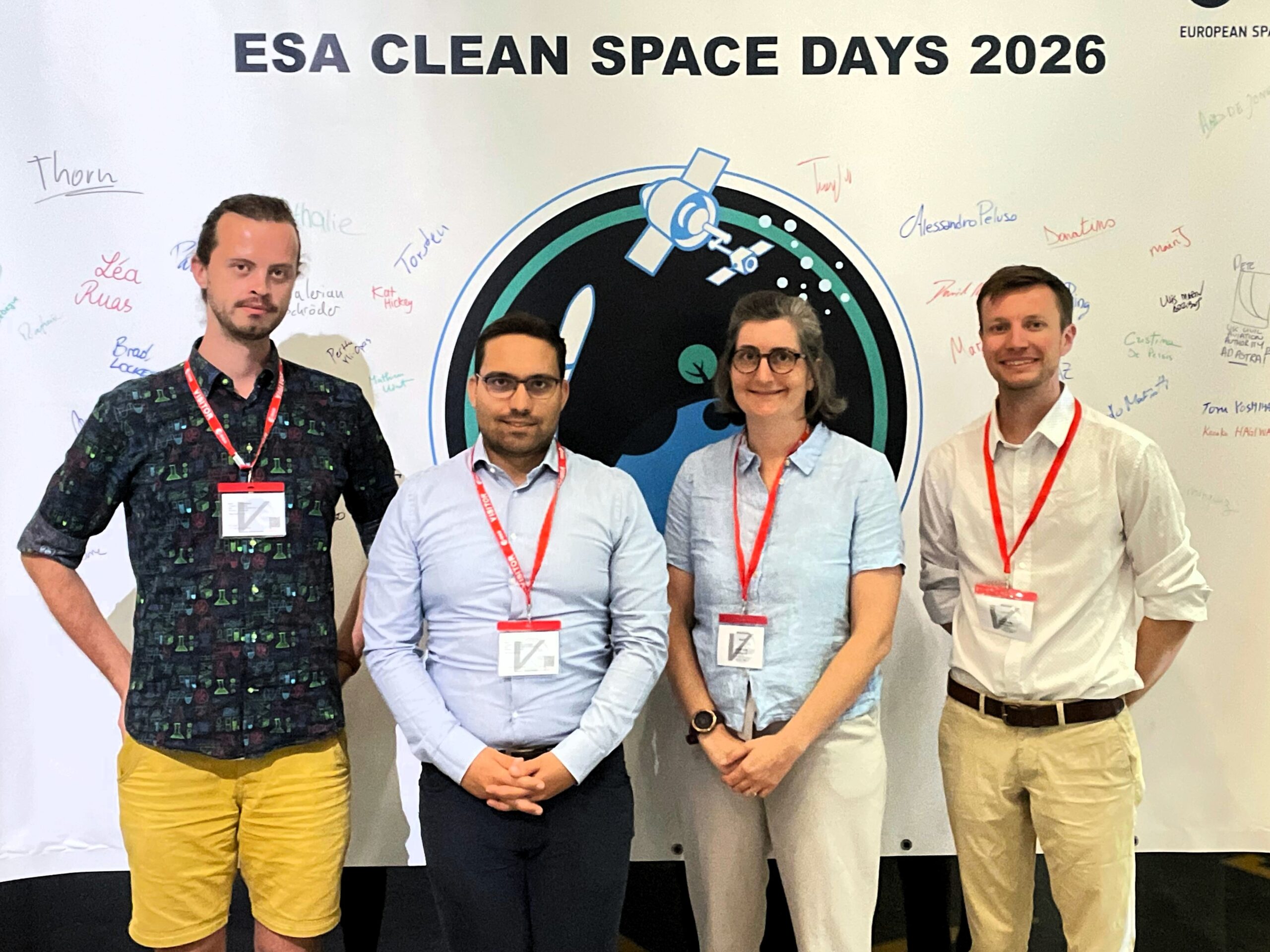

As the space industry faces strict new regulations like the European Space Act, the demand for precise Space Life Cycle Assessment (LCA) and space systems ecodesign tools has never been higher. This year, EcoDeltaV solidified its position as a leader in space sustainability at the ESA Clean Space Days 2026. Our team presented critical advancements in launch emission inventories, space debris mitigation strategies, and the commercial rollout of the space ecodesign software ACT (Assessment and Comparison Tool).
As always, this event proved to be the definitive gathering where the sector comes together to constructively tackle its most pressing sustainability hurdles. Our entire team was present, engaging in dynamic discussions with both long-standing partners and new faces across the industry. The energy was palpable, and we look forward to the collaborations that will inevitably spring from these connections. Beyond networking, EcoDeltaV took the stage on three consecutive days to showcase how we are turning cutting-edge research into operational reality for SMEs and primes alike.
Tuesday: Mastering Space LCA & Ecodesign with ACT Software
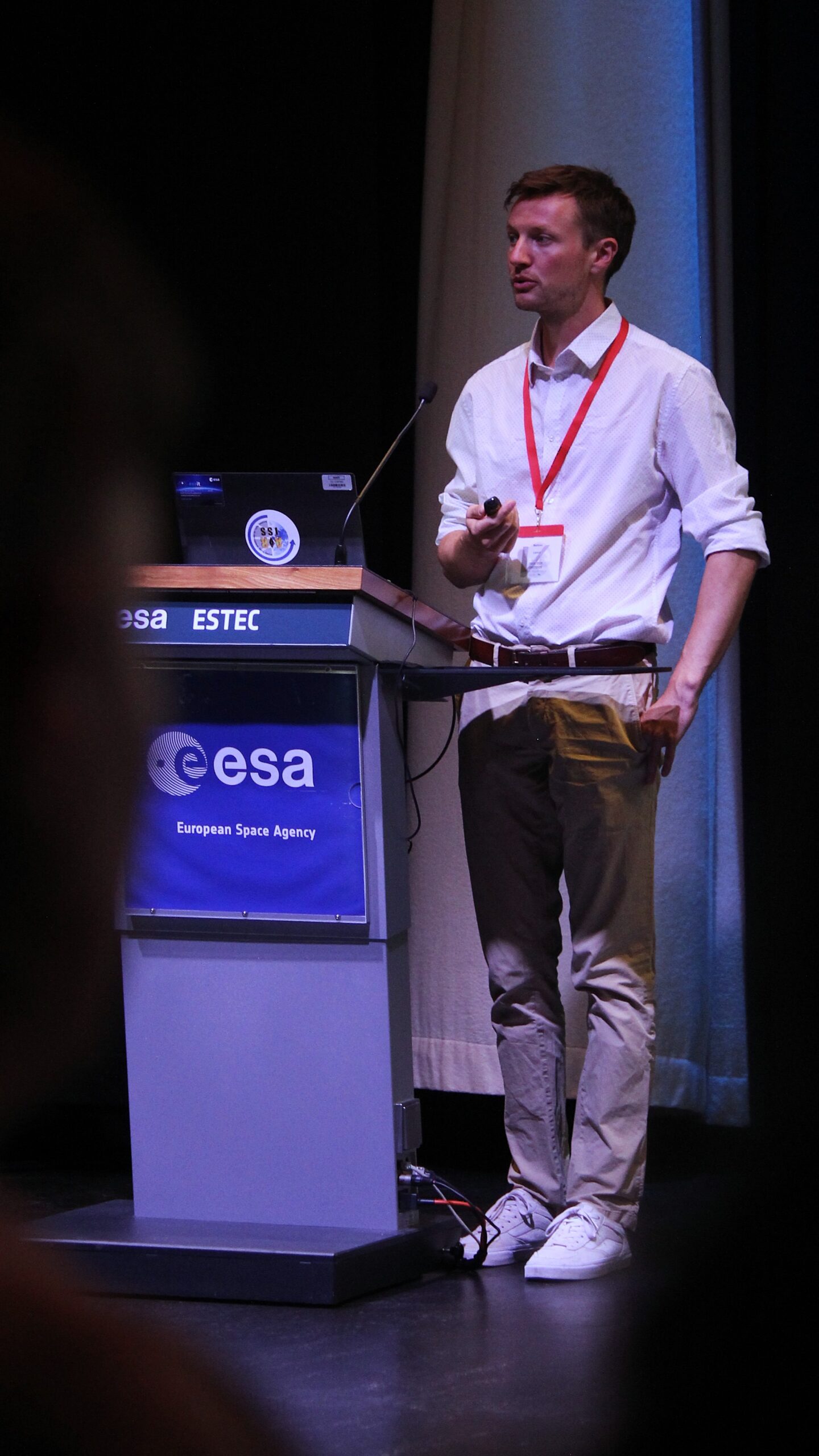
The conference kicked off for us on Tuesday with Mathieu Udriot, who presented our flagship solution, the ACT (Assessment and Comparison Tool). Born from a successful 3+ year ESA project led by EPFL, ACT is no longer just a research concept but a commercial Space LCA and Ecodesign software designed to help companies ensure space sustainability requirement compliance.
Mathieu detailed the robust technical roadmap that drives ACT’s evolution, demonstrating how direct feedback from our Early Adopters Program and rigorous stakeholder analysis ensure the tool remains aligned with the industry’s fastest-moving needs. He highlighted how ACT transforms abstract regulatory requirements into tangible ecodesign metrics for efficiency and cost, reinforcing its position as the standard for sustainable space mission planning. For SMEs lacking internal sustainability teams, ACT offers the definitive pathway to carbon footprint reduction and regulatory adherence.
Find Mathieu’s presentation here: https://indico.esa.int/event/644/contributions/12260/
Wednesday: Space Launch Emissions & Advanced Emission Inventories
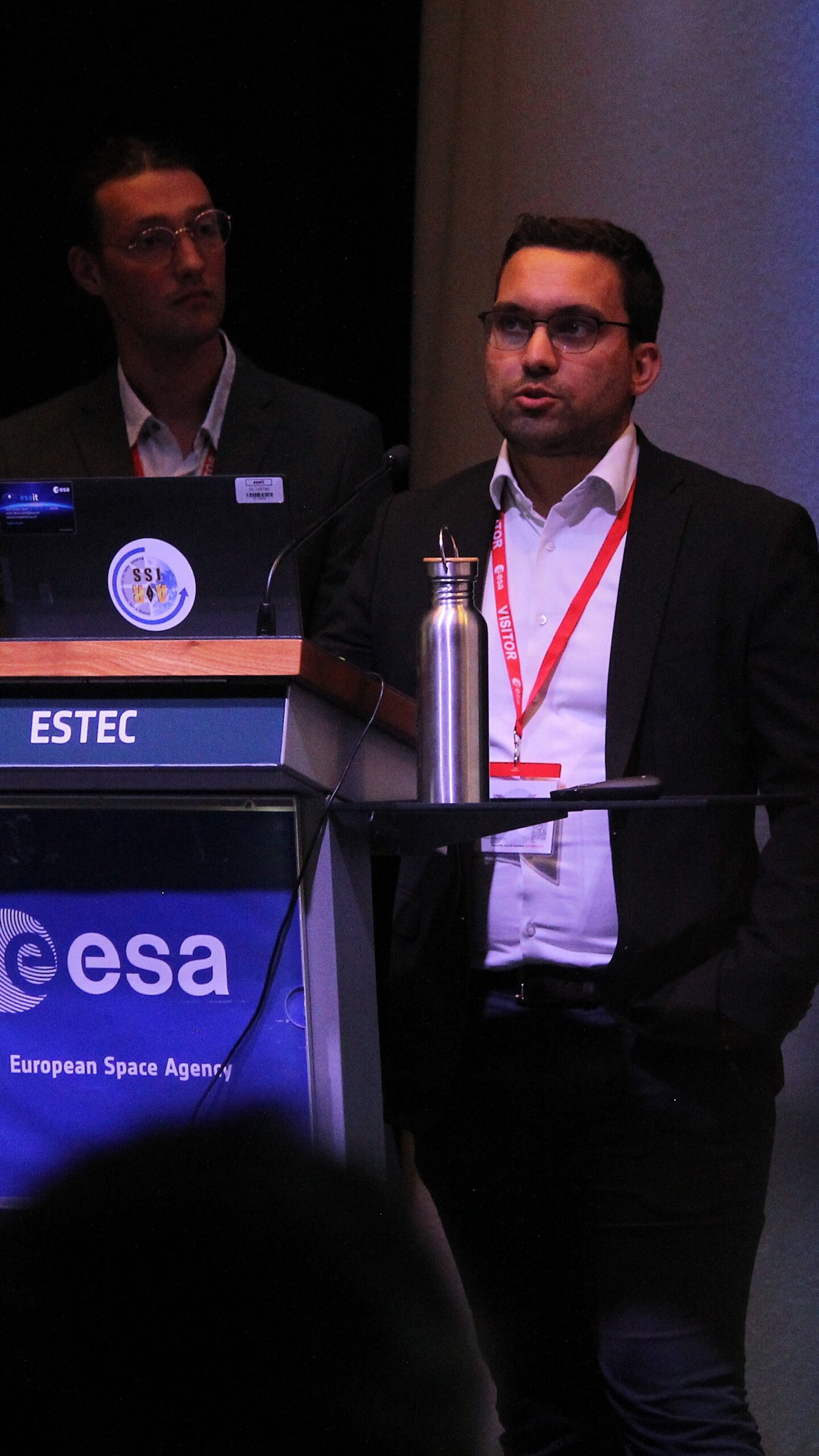
On Wednesday, the focus shifted to the upper atmosphere as Jan-Steffen Fischer took the stage to address the tripling of launch rates since 2019. His presentation introduced the LEAT and REAT frameworks, developed during his PhD candidacy at the University of Stuttgart and now integrated into the ACT ecosystem to enhance its atmospheric modeling capabilities.
Moving away from generic profiles, Jan-Steffen demonstrated how these tools capture individual trajectories, propulsion types, and complex chemical effects like afterburning and fragmentation to model vehicle-specific emission inventories. The audience gained critical insights into how this high-fidelity approach corrects historical data discrepancies and provides the state-of-the-art methodology for providing first glimpses into the ozone and climate effects of metallic re-entry particles. This work offers the clearest picture yet of spaceflight’s atmospheric footprint, a crucial step for any comprehensive Space LCA.
Find Jan-Steffen’s presentation here: https://indico.esa.int/event/644/contributions/12271/
Wednesday: Space Launch Emissions & Advanced Emission Inventories
On Wednesday, the focus shifted to the upper atmosphere as Jan-Steffen Fischer took the stage to address the tripling of launch rates since 2019. His presentation introduced the LEAT and REAT frameworks, developed during his PhD candidacy at the University of Stuttgart and now integrated into the ACT ecosystem to enhance its atmospheric modeling capabilities.
Moving away from generic profiles, Jan-Steffen demonstrated how these tools capture individual trajectories, propulsion types, and complex chemical effects like afterburning and fragmentation to model vehicle-specific emission inventories. The audience gained critical insights into how this approach creates historical data and provides a state-of-the-art methodology for providing first glimpses into the ozone and climate effects of metallic re-entry particles. This work offers insights on spaceflight’s atmospheric footprint, a crucial step for any comprehensive Space LCA.
Find Jan-Steffen’s presentation here: https://indico.esa.int/event/644/contributions/12271/
Thursday: Space Debris Mitigation & Ecodesign With The EPFL Sustainability Handbook
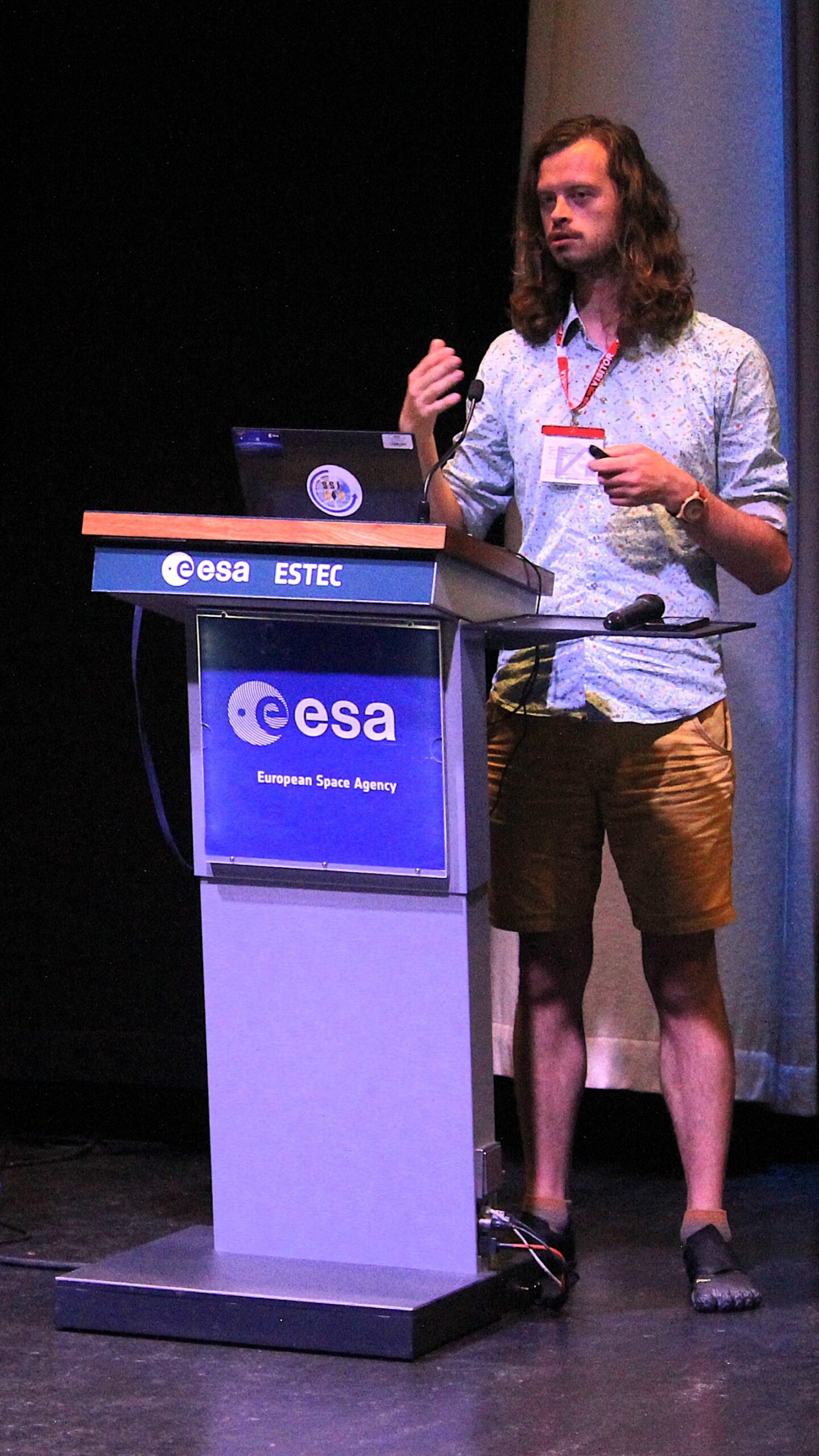
Rounding out our presentations on Thursday, Marnix Verkammen unveiled the first version of the EPFL Handbook on Sustainable Practices of Space Mission Design. This pivotal resource was developed during Marnix’s tenure as a Research Engineer at the EPFL Space Center, prior to his current role at EcoDeltaV. Addressing the urgent need to navigate the space debris mitigation guidelines and ecodesign recommendations, Marnix explained how this handbook serves as a pragmatic bridge between high-level sustainability goals and daily engineering decisions.
The highlight was the comprehensive hardware decision tree, a novel tool that guides system engineers in selecting specific technologies—from design-for-demise materials to passive detumbling devices—early in the mission planning phase. By integrating ESA guidelines and ISO standards, this handbook aims to inform engineers and decision-makers on sustainable design practices across the ecosystem, ensuring future missions are both technically feasible and environmentally responsible. It stands as an essential reference for anyone navigating the complexities of orbital preservation and terrestrial impact.
Find Marnix’s presentation here: https://indico.esa.int/event/644/contributions/12285/
Looking Ahead: The Era of Implementation
The messages from ESA Clean Space Days 2026 were clear: the era of theoretical sustainability is over. ESA’s new Ecodesign Policy is a prime example of this shift in the sector. The industry is ready for implementation, demanding Space LCA tools that offer precision, ecodesign guidelines that offer clarity, and roadmaps that offer reliability. EcoDeltaV is committed to providing exactly that. Whether through the ACT software — enriched with advanced emission modeling capabilities and a space debris index — our specialized consultancy services, or our contribution to standardized design practices, we are here to bring lifecycle insights into your mission design!
Ready to optimize your mission’s environmental performance?
- Explore ACT: Discover how our Space LCA software can streamline your compliance and design process.
- Join the Early Adopter Program: Get exclusive access to new features and shape the future of ACT.
- Contact Us: Speak with our experts about ecodesign consultancy or emission inventory analysis.
Reach out to us through our contact form for any of the above inquiries!
Thank you to everyone who stopped by to chat, challenge our ideas, and explore potential partnerships. The momentum from this week is immense, and we are eager to translate these discussions into tangible progress for a sustainable space future.